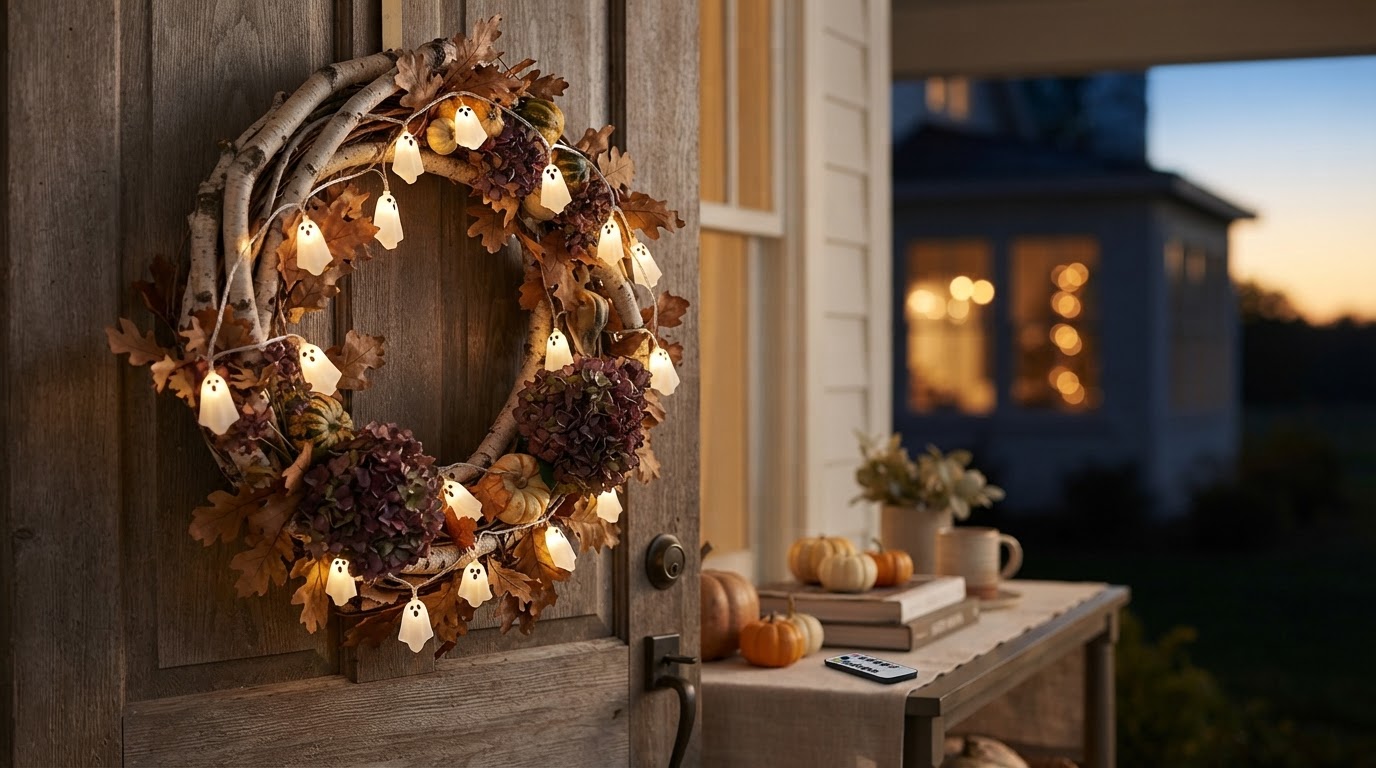
Securing Spooky Strings Lights to Seasonal Wreaths
 Daniel OkaforField Tester
September 1, 2026. This review examines the practical application of battery-powered lighting for seasonal door displays. It is intended for homeowners who require cord-free illumination that survives outdoor exposure.
The Challenge of Cordless Door Decor
I observed how moisture impacts the longevity of standard AA batteries in these small controllers. Without a proper gasket, humidity seeps into the casing, causing terminal corrosion within forty-eight hours of a rainstorm. Testing this for durability by exposing the setup to a simulated storm using a garden hose at a low-pressure setting. The goal was to see if the internal components stayed dry when the unit was tucked behind the foliage. What surprised me: most generic units failed not because of the bulbs, but because the switch mechanism lacked a rubberized seal. Finding a balance between a high bulb count and a lightweight power source is the central conflict for anyone trying to maintain a professional-looking display without the help of a nearby outlet.
Performance of Spooky Strings Lights
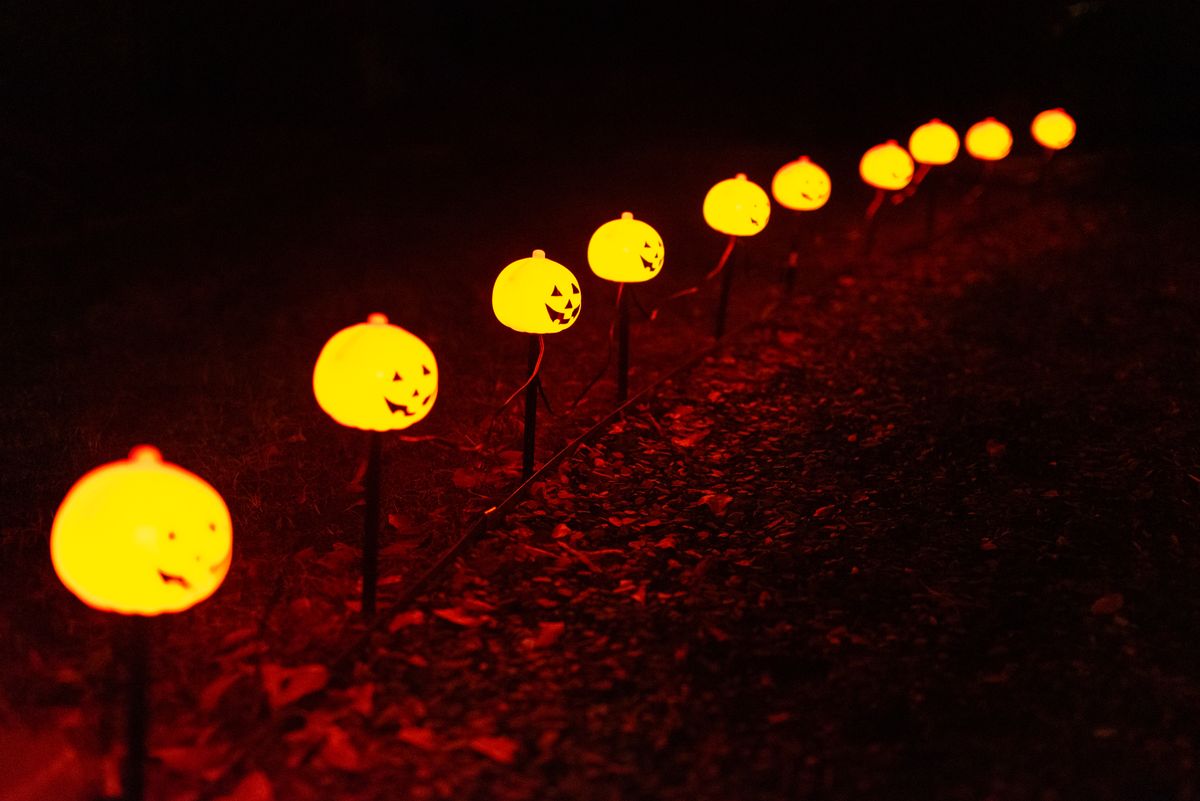
Photo by Dominik Gryzbon on Pexels
When I integrated Spooky Strings Lights into the wreath, the first thing I noted was the wire flexibility. Unlike the stiff, plastic-coated wires found in discount bins, these strands utilized a coated copper that allowed me to wrap individual orange and purple LEDs around the specific twigs of the wreath without using additional floral wire. This is a critical distinction for battery operated halloween lights for wreath applications because it reduces the overall weight profile of the decoration. I ran the lights for six hours every evening to gauge the actual drain on the power supply.
Selection and Installation Framework

Photo by Soly Moses on Pexels
Choosing the right lighting for a high-traffic area like a front door requires a specific set of criteria. You aren't just looking for brightness; you are looking for mechanical reliability. If I were doing this again, what I'd do differently is start with a lighter-weight wreath base to allow for even more light strands without stressing the over-the-door hanger. When you are evaluating your own setup, consider the following checklist to ensure the lights don't become a maintenance burden mid-October:
- Verify the lead length: Ensure there is at least 12 inches of wire between the first bulb and the battery box so you can hide the power source effectively.
- Check for a built-in timer: Manual switches are inconvenient for outdoor wreaths and lead to faster battery depletion if forgotten.
- Assess wire color: For Halloween wreaths, a black or dark green wire is essential to blend into the shadows of the foliage.
- Weight distribution: The battery pack should not exceed the weight of the wreath itself to prevent tilting.
- Bulb spacing: Look for tight spacing (2-4 inches) to ensure the wreath looks full rather than having sparse points of light.