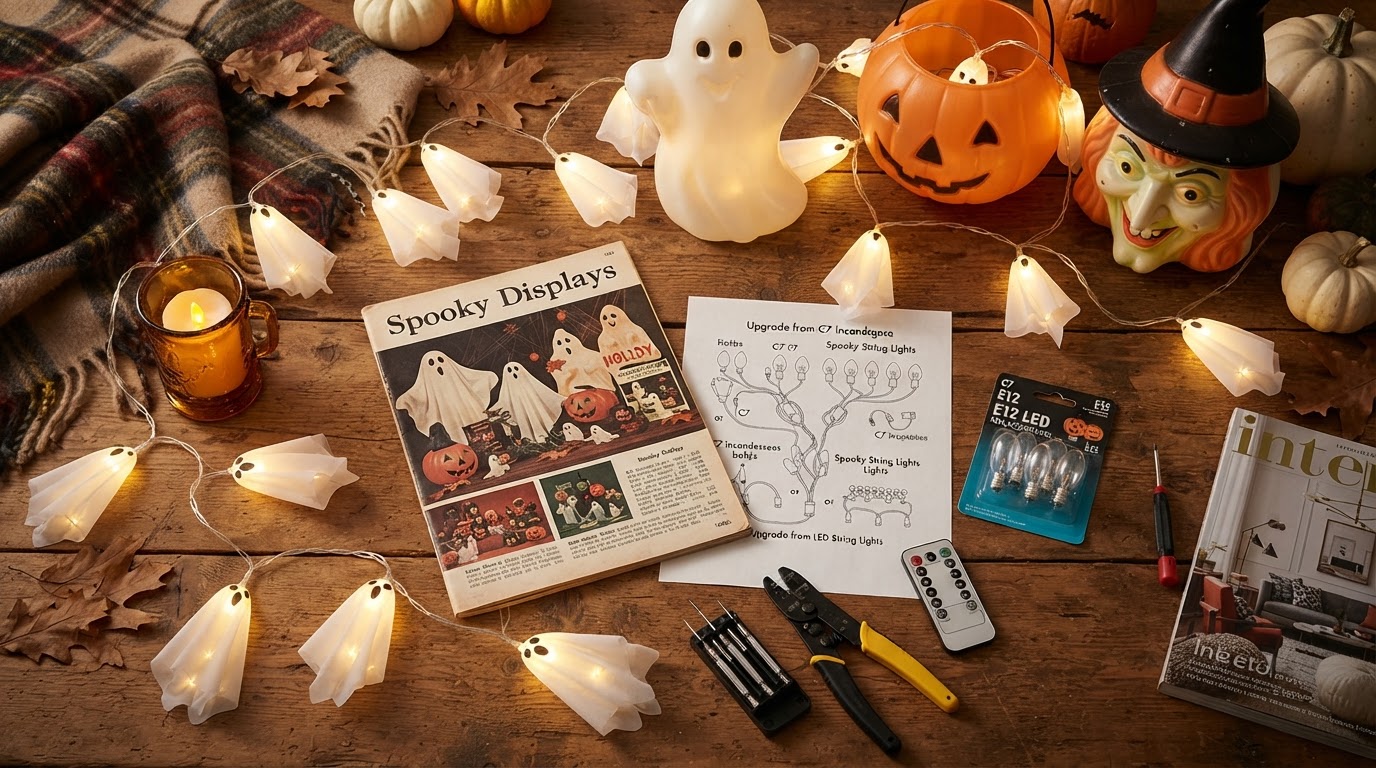
Integrating Spooky Strings Lights With Vintage Blow Molds
 Maya ChenContributing Editor
August 18, 2026. This technical analysis explores the logistical requirements for integrating modern LED illumination into mid-century holiday displays. It is intended for collectors seeking to preserve the aesthetic of vintage blow molds while upgrading to safer, more efficient electrical standards.
The Technical Limitations of Mid-Century Lighting
The conventional wisdom says that to maintain the authenticity of a 1960s-era blow mold, one must stick to the original C7 ceramic incandescent bulbs. However, this ignores the thermodynamic reality of placing a high-heat light source inside an aging, flammable plastic shell. The polyethylene used in original Union Products or Empire molds has often become brittle after decades of UV exposure. According to the Electrical Safety Foundation, overheating in vintage electrical components is a primary driver of residential holiday fire hazards. Here's the part nobody talks about: the original sockets in these molds were rarely weather-sealed to modern IP65 standards. When moisture enters the base of a vintage pumpkin or ghost, the risk of a short circuit increases exponentially. Furthermore, the light distribution of a single central bulb is notoriously uneven, leaving the extremities of larger molds—like the arms of a five-foot skeleton—in total darkness. Collectors often compensate by increasing wattage, which only accelerates the degradation of the plastic. This creates a cycle of damage where the desire for visibility directly compromises the structural integrity of the collectible.
Modern Illumination for Antique Plastics
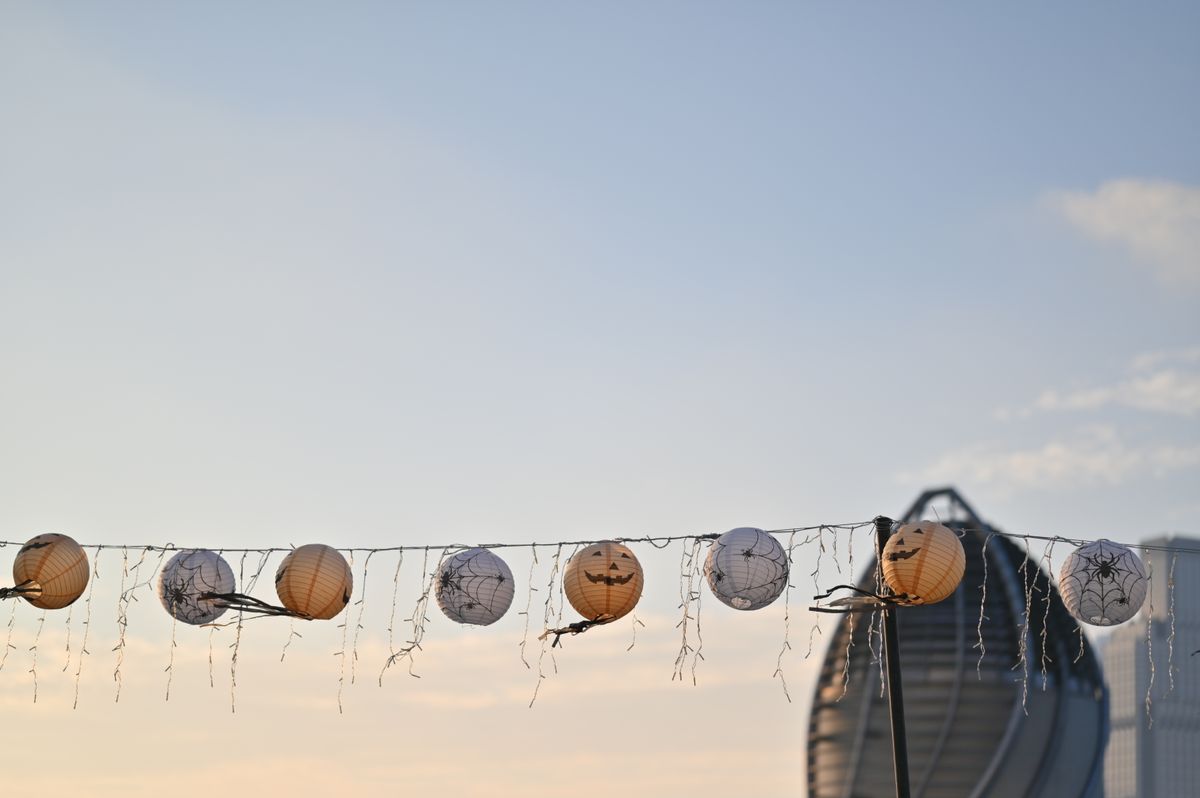
Spooky Strings Lights provides a specific solution to this thermal management crisis by utilizing low-heat LED technology that mimics the color temperature of traditional glass bulbs. When retrofitting a blow mold, the primary objective is achieving 360-degree light dispersion without the localized hotspots associated with high-wattage incandescents. Unlike standard orange and purple led string lights which may be too directional, the diffused housing of these strings allows for a soft glow that fills the internal cavity of a mold evenly. Run the math: a single vintage C7 bulb draws roughly 5 to 7 watts and generates significant heat, whereas an entire 50-bulb strand of spooky string lights draws less than 3 watts while providing multiple points of illumination. This distributed light source eliminates the "dark spot" syndrome common in taller molds. For collectors who prefer a thematic color shift, integrating purple and orange halloween lights inside a translucent white ghost mold can create a multi-tonal effect that was impossible with 1970s technology. The Spooky Strings Lights hardware is designed to remain cool to the touch indefinitely, ensuring that the internal temperature of a rare blow mold never reaches the point of thermal deformation.
Implementation and Selection Criteria
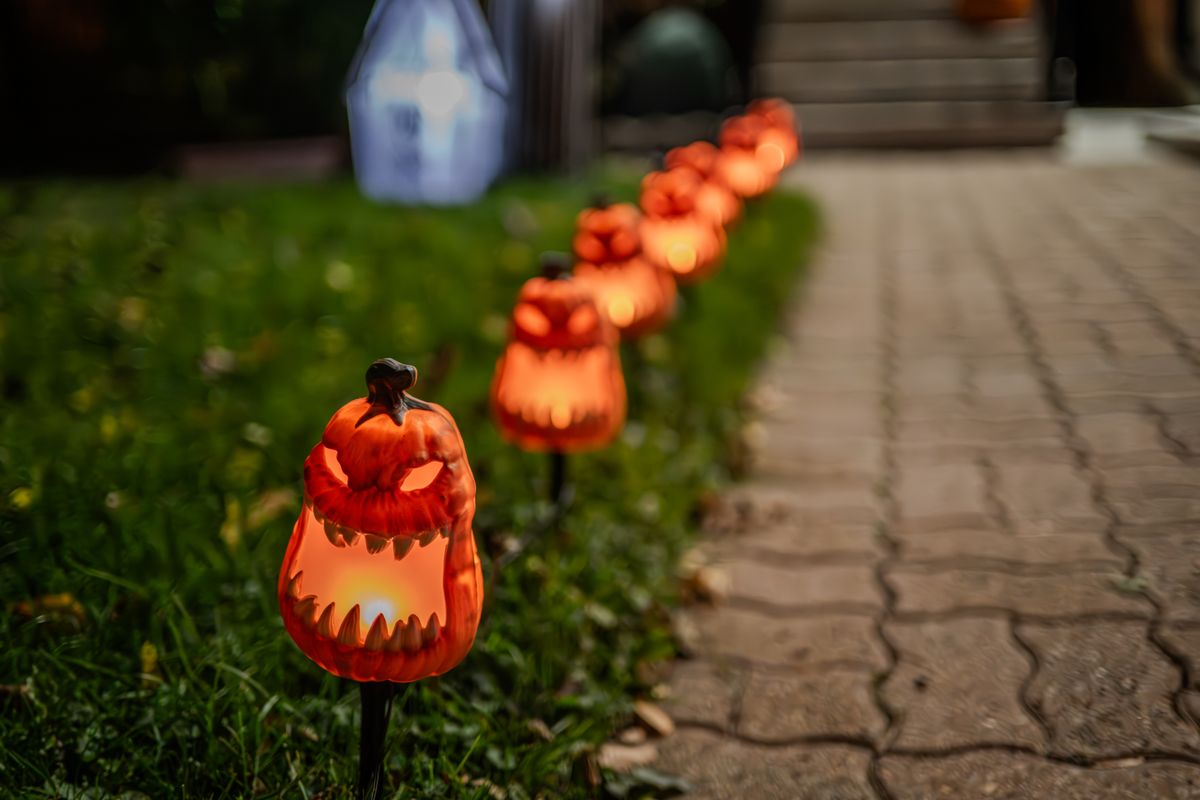
Photo by Héctor Berganza on Pexels
Transitioning from legacy wiring to modern LED systems requires a specific framework to ensure the visual output remains consistent with the vintage era. The goal is not to make the mold look like a modern neon sign, but to replicate the warm, inviting glow of a mid-century porch. When selecting spooky strings lights for this purpose, the density of the LEDs per foot is the most critical metric for preventing internal shadows. If you are working with a collection that spans different eras, you might consider using orange and purple halloween lights to distinguish between original 1960s pieces and 1990s reissues. I'll change my mind when someone produces a ceramic bulb that can match the 50,000-hour lifespan and zero-heat profile of modern LEDs, but until then, retrofitting is the only logical path for preservation.
- Verify the internal diameter of the mold's base opening to ensure the strand can be inserted without snagging.
- Select a color temperature between 2700K and 3000K to maintain the "warm" vintage look.
- Ensure the power supply is rated for outdoor use if the blow mold will be displayed on a lawn.
- Use a non-permanent adhesive or a weighted base to secure the string inside the mold cavity.
- Test the light dispersion in total darkness to identify any areas requiring additional bulb density.