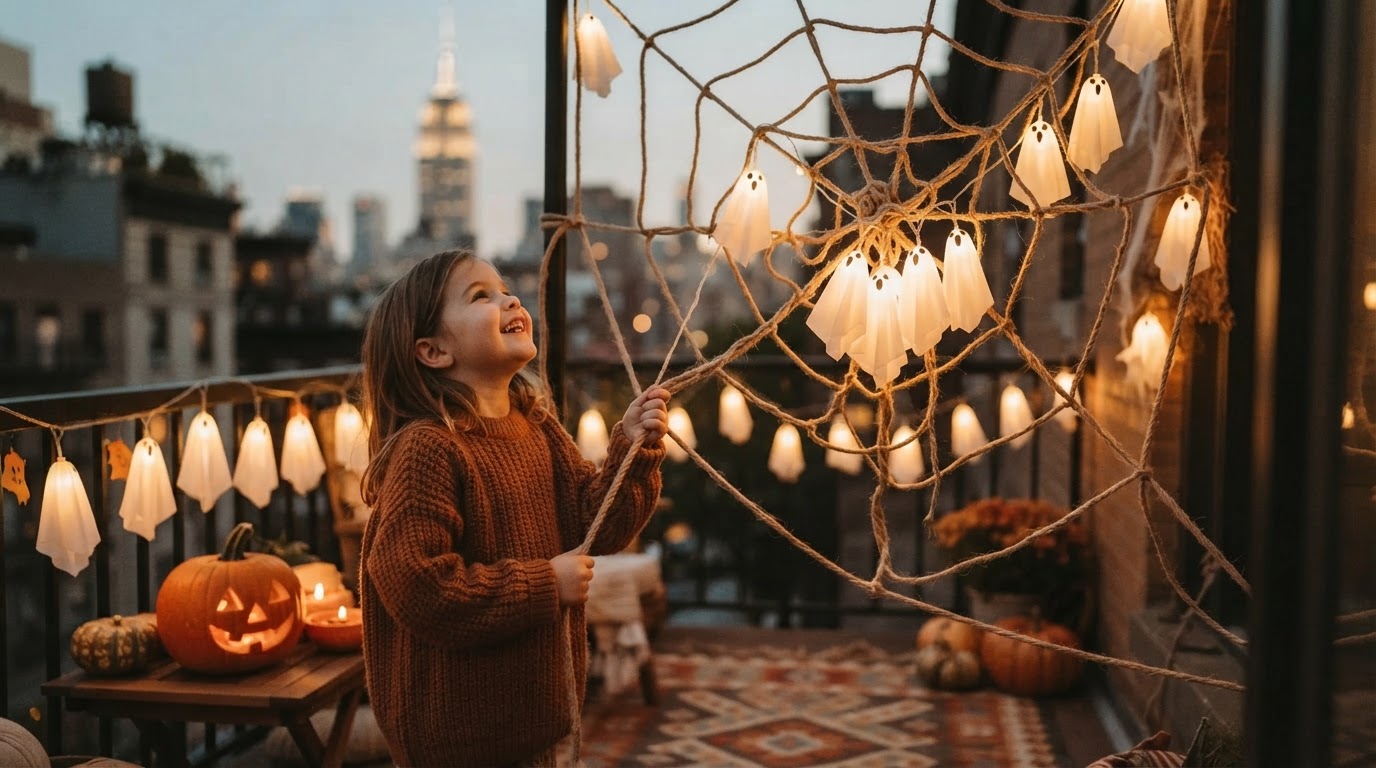
5-Step Spooky Strings Lights Spider Web Assembly
 Daniel OkaforField Tester
October 12, 2026 — The seasonal shift toward intricate arachnid-themed displays has led many decorators to integrate Spooky Strings Lights into large-scale structural webs this year.
I tested this for a high-wind outdoor setup to see how modern LED strands interact with traditional web frameworks. While many decorators look toward [vintage Halloween blow mold lights](/blog/vintage-halloween-blow-mold-lights) for a nostalgic glow, the move toward structured, illuminated geometry requires a more flexible light source. A common starting point for these installations is the LumaBase Electric Lighted Spider Web, which provides a 53.3-inch diameter foundation equipped with 70 amber LED lights, as noted by LumaBase. However, to achieve a truly immersive yard display, I found that layering additional strands is necessary to define the outer perimeters and anchor points.
The 5-Step Structural Setup
I spent forty-eight hours observing how the tension of Spooky Strings Lights held up against the weight of a heavy-duty web frame. The first step involves identifying a central hub, usually a tree trunk or a porch pillar, to serve as the web's origin. Step two requires running heavy-gauge monofilament or paracord to create the radial lines; I found that using the light strands themselves for the primary structural load leads to sagging by day two. In step three, I began the spiral weaving process. What surprised me: the Spooky Strings Lights maintained their color consistency even when tightly coiled around the radial lines. Step four is where I integrated accent lighting, such as [skull LED string lights](/blog/skull-led-string-lights), to act as 'prey' caught in the outer rings. Finally, in step five, I secured the intersections with weather-rated cable ties. Day three is where I noticed the importance of the IP rating; despite a heavy morning mist, the connections remained dry and the illumination steady. If you are looking for more specific animal motifs, you might also consider [optimizing Spooky Strings Lights for bat themed decor](/blog/spooky-strings-lights-bat-themed-decor) to fill the negative space around the web. One thing I would do differently is increase the density of the inner rings to create a brighter focal point for the central spider.
Expert tip: When wrapping the lights around the web frame, leave a two-inch slack loop at every third intersection point to prevent wire fatigue caused by thermal expansion and contraction during cold October nights.
Integrating these lights alongside [bat shaped string lights](/blog/spooky-strings-lights-bat-themed-decor) creates a layered, multi-dimensional effect that single-strand setups lack. The durability of the housing ensures that the web remains a centerpiece throughout the entire month of October.
Sources
Photo by Anastasija Paršina on Pexels
- Electric Lighted Spider Web and Spider - LumaBase
- Fairy Light Spider Web - Pinterest
- Making a Spider Web Halloween Decoration Idea - YouTube