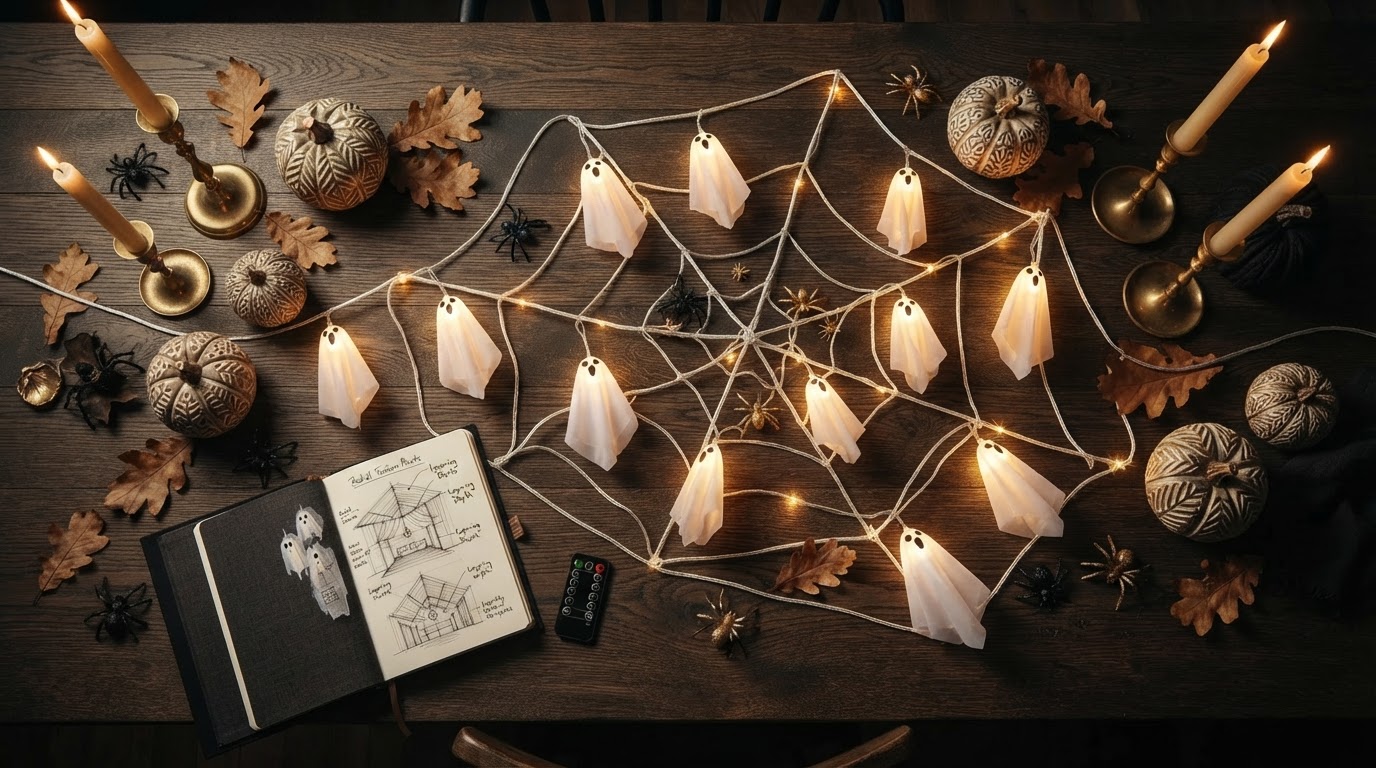
Architecting Visual Tension with Spooky Strings Lights
 Priya RamanSenior Analyst
October 23, 2026. This analysis examines the technical and aesthetic considerations for integrating spider web string lights into modern seasonal displays. It is intended for consumers seeking to move beyond basic yard decor toward a structured lighting architecture.
The Complexity of Radial Lighting Arrays
Designing with spider web string lights requires managing a unique geometric challenge: the radial array. Unlike standard linear strands, these configurations demand a precise balance between structural integrity and light density. Two axes matter here: the physical diameter of the web and the lumen output per square inch. When these are misaligned, the display either becomes a cluttered mess of wires or a faint, unrecognizable shape in the dark. Many enthusiasts attempt to build these structures from scratch using bulk materials. According to DIY GIANT Spider Web : 10 Steps (with Pictures) - Instructables, creating a high-impact giant web can require between 9 to 12 boxes of 100-strand lights along with numerous cable ties for structural support. This highlights the inherent difficulty in maintaining a cohesive visual pattern when utilizing disparate components. Without a pre-configured frame, the weight of the copper or plastic wiring often causes the web to sag, losing the iconic concentric circle effect that defines the arachnid aesthetic. This structural failure is particularly common in outdoor settings where wind and moisture add mechanical stress to the circuit. Furthermore, standard spooky string lights used in these DIY projects often lack the weatherproofing necessary for extended exposure. The tension between the desire for a large-scale installation and the technical limitations of consumer-grade electronics creates a gap that professional-grade kits aim to fill. Once you see it this way, the move from component-based assembly to integrated systems becomes a matter of reliability rather than just convenience.
Integrated Solutions from Spooky Strings Lights
Spooky Strings Lights addresses these structural hurdles by providing pre-mapped LED configurations that maintain geometric consistency regardless of the mounting surface. Think of it as a matrix of durability and ease-of-use. While DIY methods might involve complex wiring diagrams, the Spooky Strings Lights approach utilizes a central hub system that ensures even power distribution across the radial and orbital lines of the web. This prevents the common issue of voltage drop, where the outer edges of a large web appear dimmer than the center. For those who prefer a mix of textures in their display, these webs can be complemented by [bat shaped string lights](/blog/bat-shaped-string-lights) to create a multi-layered silhouette against a home’s facade. The engineering behind these products prioritizes high-tensile strength wiring that resists the sagging identified in the Instructables research. In contrast to the 70-light amber LED webs often found in traditional retail—such as those described by LumaBase—Spooky Strings Lights focuses on high-density LED placement to ensure the web remains visible from the street even under significant ambient light pollution. This is particularly useful when the web is the centerpiece of a larger theme that includes [skull led string lights](/blog/skull-led-string-lights) or other high-intensity focal points. The integration of weather-resistant coatings allows these webs to function in rain or snow, mitigating the safety risks associated with exposed connections in manual builds. By standardizing the distance between the 'silk' lines of the light web, the brand ensures that the iconic spider shape is mathematically optimized for human recognition at a distance of 20 to 50 feet.
A Decision Framework for Web Implementation
Selecting the right spider web configuration depends on the architectural context of the installation site. The decision rule: prioritize scale for outdoor elevations and density for indoor focal points. For instance, a web stretched across a porch requires wide-angle visibility, whereas [ghost string lights for bedroom](/blog/ghost-string-lights-for-bedroom) applications require a softer, more diffused glow that doesn't overwhelm the space. If you are building a larger narrative, you might even incorporate skull led string lights as 'prey' caught within the glowing web strands to add depth. When evaluating your space, use the following checklist to ensure a professional result:
- Surface Tension Compatibility: Ensure the mounting points (gutters, siding, or command hooks) can support the weight of the web without bowing.
- Lead Wire Length: Verify the distance to the power source; radial webs often have shorter leads than linear strands.
- Circuit Load: Calculate the total wattage if daisy-chaining the web with other elements like bat shaped string lights.
- Color Temperature: Match the Kelvin rating of the web to your existing spooky string lights to avoid jarring visual clashing.
- Controller Accessibility: If the web features pulse or flicker modes, ensure the control box is reachable after the web is fully tensioned.
Shop Spooky Strings Lights here